

Why I Don’t Want to Be Making Decisions on the Sideline That I Could Have Made Yesterday
Game day already contains enough decisions.
I don’t want to add unnecessary ones.
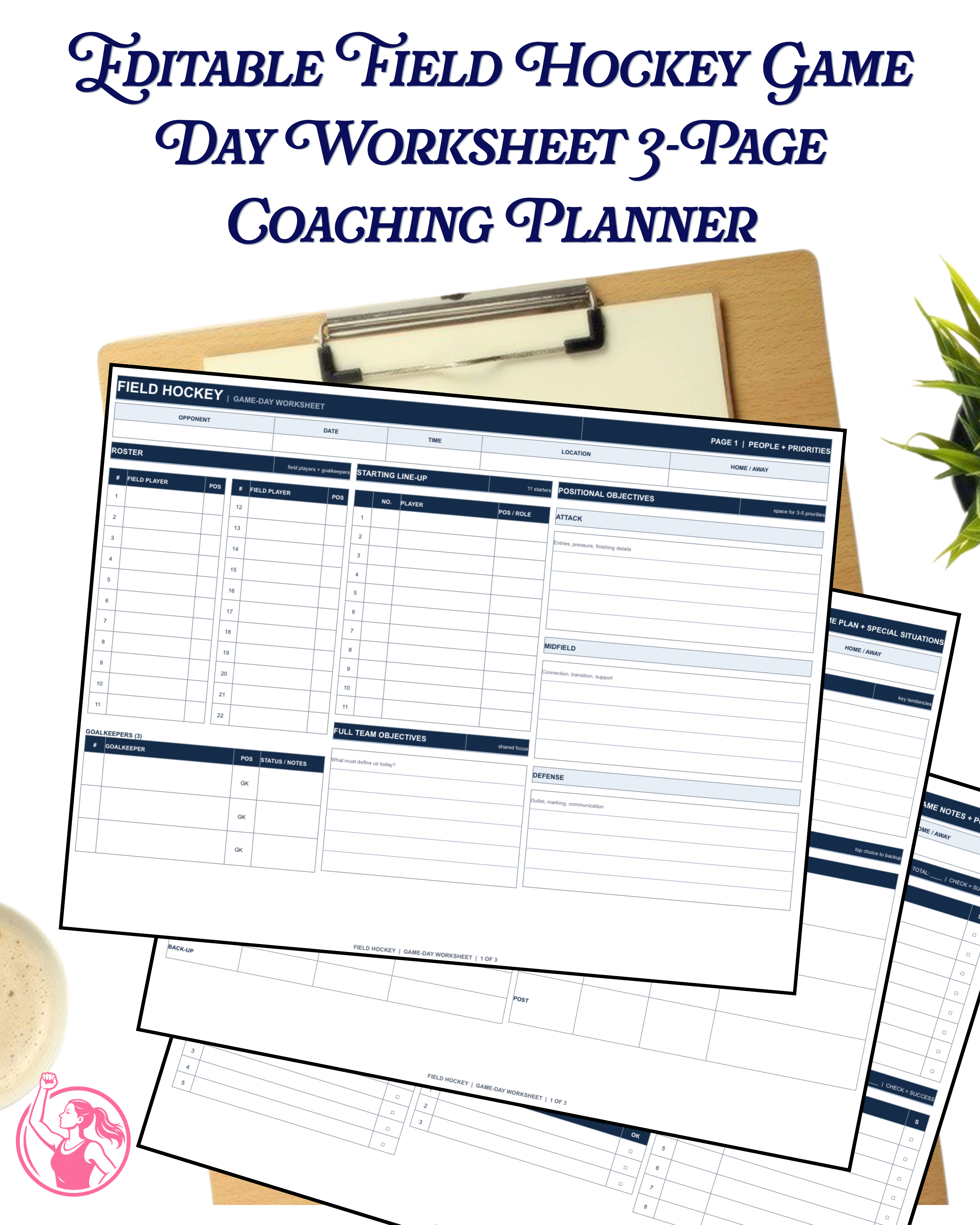
That’s why I use a Game Day Worksheet to organize as much information as possible before competition begins.
Our roster. Starting lineup. Positional Depth chart. Positional objectives. Team objectives. Penalty-corner personnel. Shootout options. Opponent notes. Staff responsibilities.
The goal isn’t to predict everything that will happen.
That’s impossible.
The goal is to remove avoidable cognitive load.
Preparation creates space to coach
If we’ve already discussed:
- Who is the next option at a position?
- Who is responsible for watching a specific opponent behavior?
- What are our most important objectives?
- Who owns substitutions?
- What are we looking for on attacking and defensive penalty corners?
Then we aren’t trying to solve those administrative questions while the game is moving.
We’re watching the game. We’re communicating with athletes. We’re recognizing patterns. We’re coaching.
How I use it with my staff
Before competition, the worksheet becomes a quick staff alignment tool.
Everyone should understand the plan—but also understand where we may need to adapt.
That’s an important distinction.
Preparation isn’t about becoming rigid.
Preparation gives you a strong enough starting point that you have more capacity to adapt when the game inevitably gives you something you didn’t expect.
THE SYSTEMS BEHIND THE STAFF
This article is part of a six-part series exploring the tools and systems I use to organize my coaching staff, plan our training, prepare for competition, and create more intentional feedback for our athletes.

Leave a Reply